PDF compression
Compress PDF
Scanned PDFs get heavy fast — a handful of full-page images easily outgrows an email limit. Paperly shrinks the file where the weight actually is, and shows you the result before anything is sent.
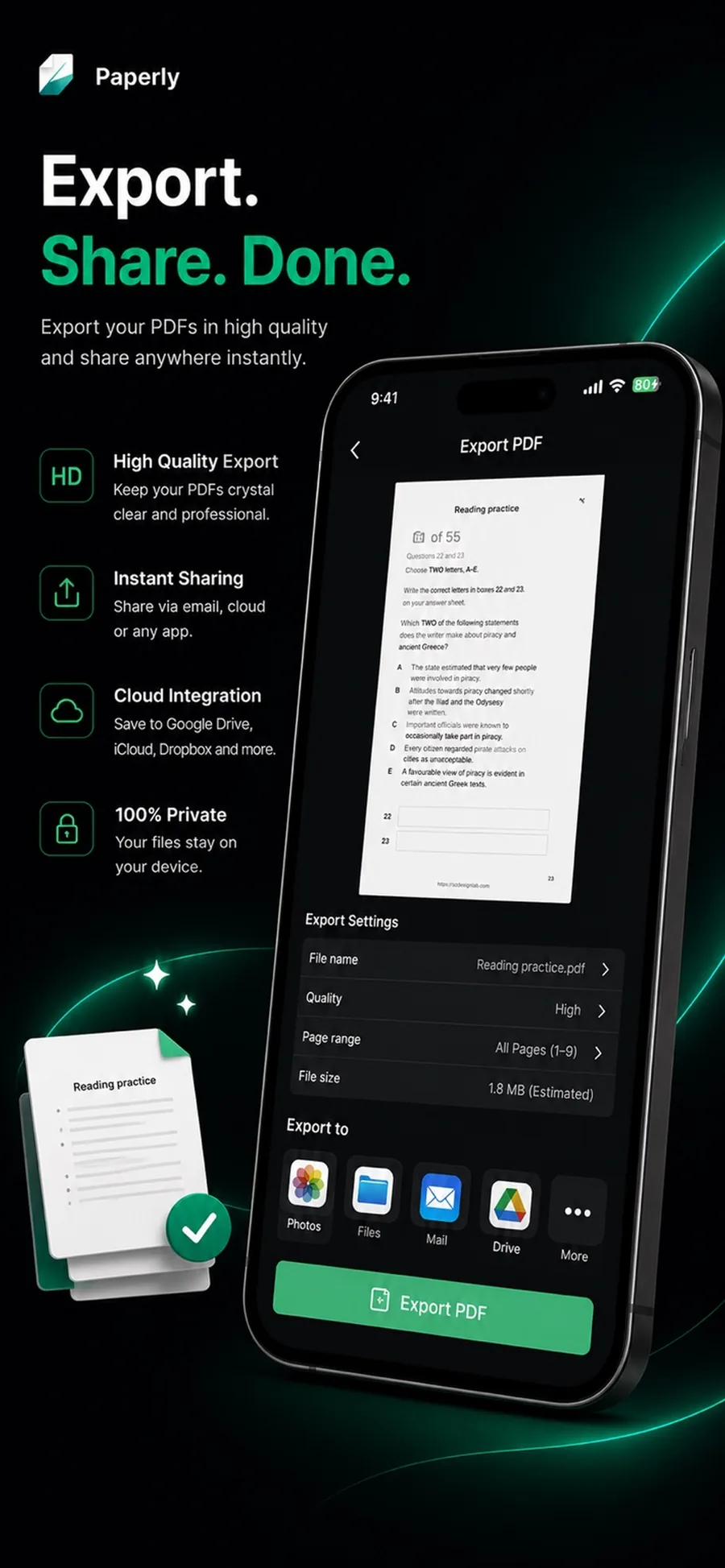
What it is
PDF compression reduces a document's file size, mostly by re-encoding the page images inside it. Paperly compresses PDFs on the device, targeting the point where the file becomes easy to email or upload while the text stays crisp and readable.
When you reach for it
- A scanned document bounces back for being over the email limit
- An upload portal rejects files above a fixed size
- A multi-page scan must be small enough to open quickly on the other end
- Old scans should take less space in long-term storage
How Paperly does it
- 01
Pick the document
Open any PDF in the library and check its current size before you decide how far to compress.
- 02
Compress on-device
Paperly re-encodes the page images locally and reports the new size. No upload bar, no waiting room, no server.
- 03
Check readability, then send
Zoom in on the compressed pages before exporting — the goal is a smaller file, not a blurrier one.
Questions people ask
Compression trades a little image detail for a much smaller file. Paperly aims for the setting where text stays comfortably readable — you can inspect the result before exporting.
It depends on the pages. Image-heavy scans typically shrink dramatically; documents that are already mostly text have less to give. The app shows the resulting size before you export.
Yes. The output is a standard PDF that opens in any reader — searchable text layers from OCR are preserved.
Related features
PDF Editor
Paperly is an on-device PDF editor for Windows and iPhone: merge and split PDFs, reorder pages, annotate, add signatures, and compress files privately.
ExploreImage to PDF
Convert images and photos to PDF on your device with Paperly.
ExploreMerge PDF
Merge PDF files on your device with Paperly: combine scans and existing PDFs, arrange the page order, and export one file — processed locally.
Explore
Try compress pdf where it runs best.
Paperly for iPhone — private, on-device, and free to download.